


Introduction:
This lesson will focus on identifying numbers and number comparison in graphs. Candidates will be able to connect those data to real-life experiences. They will explore fun facts of those data through examples, activities, and quizzes. By the end of this lesson, they will be able to create their own table or graphs to display the contrast between data and demonstrate their ideas.
JIJI
Tasks:
Students will help the characters in the story solve the problem.
Students will accomplish their in-class tasks in groups or individually.
Students will create their own graphs or charts based on their interested topic from their daily lives.
JIJI
Task Details
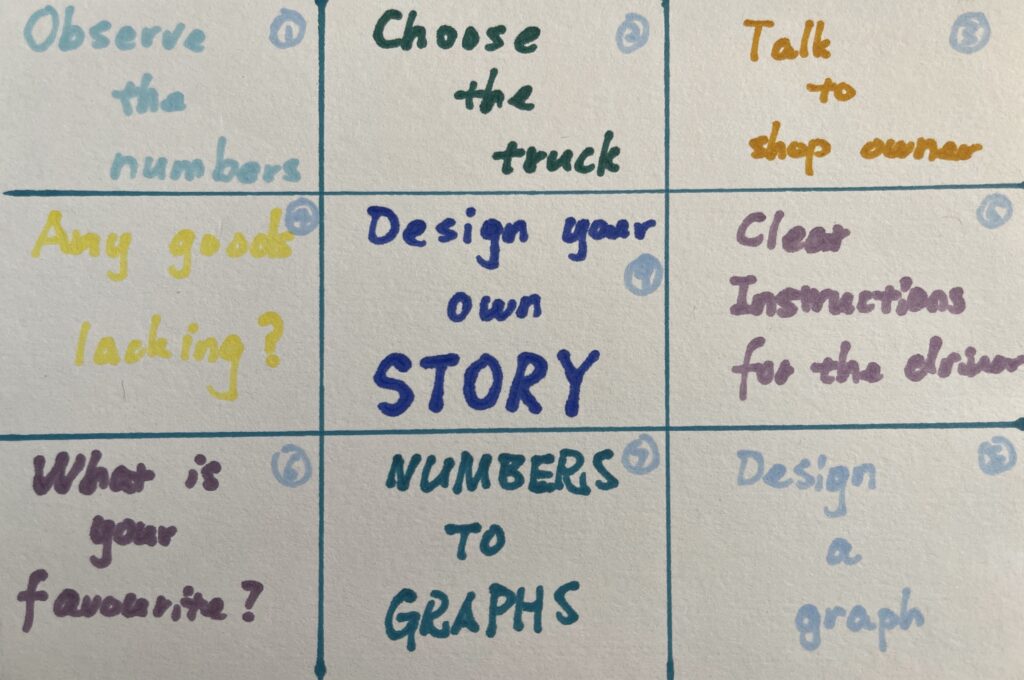
Students will finish at least two blocks in this Tic Tac Toe task. The instructor could divide the job for the students or let them choose, and this depends on whether it is individual work or group work.
JIJI
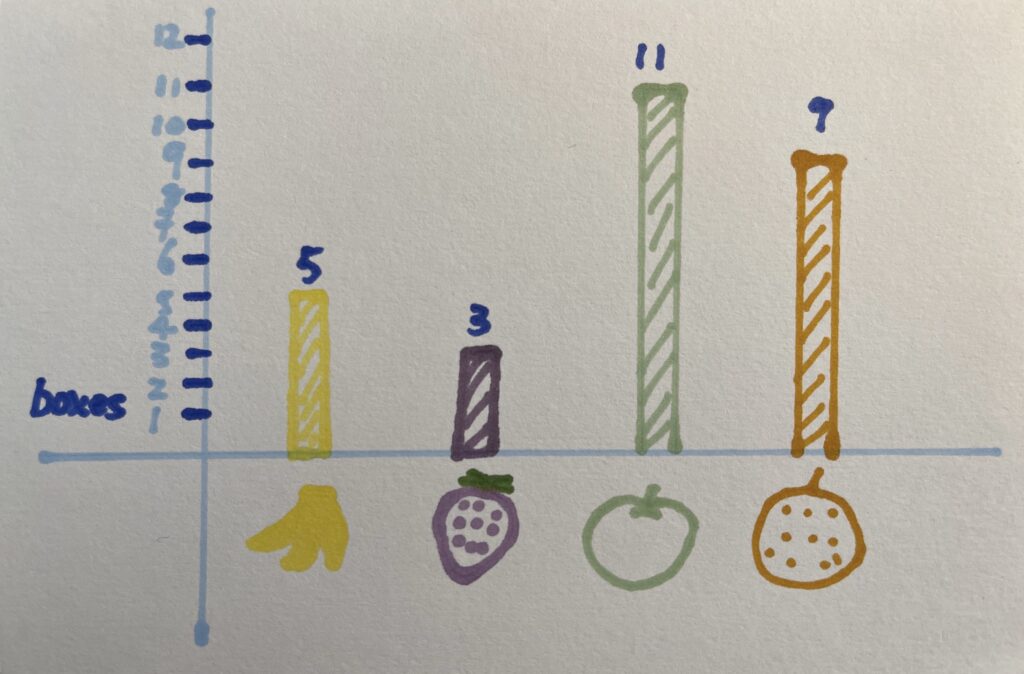
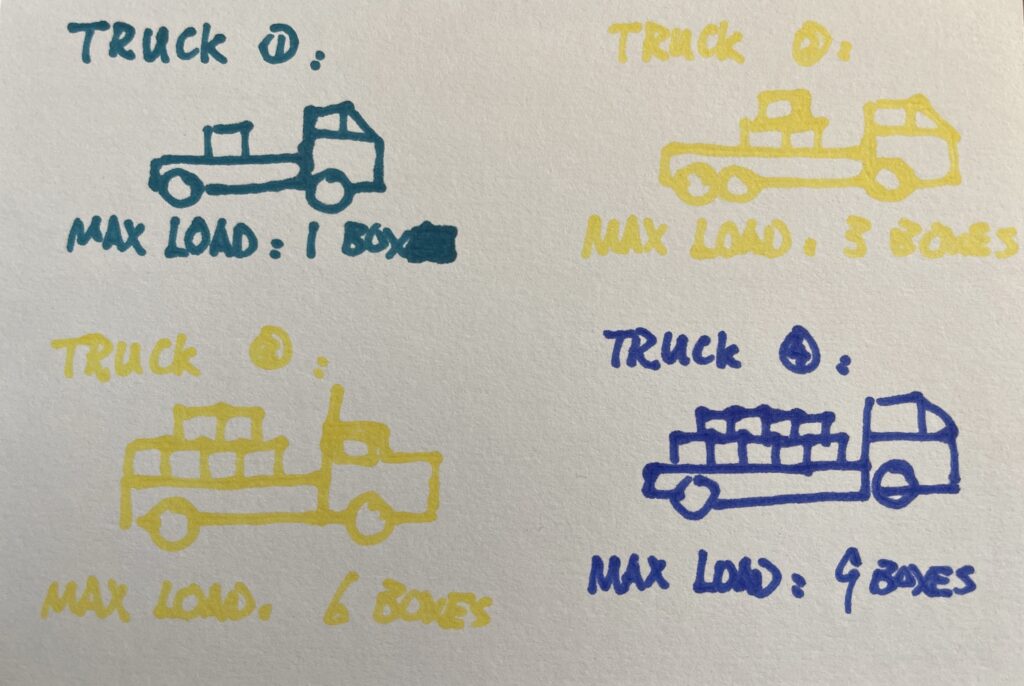
The students will identify what kind of goods need restock by identifying the provided data and choosing the correct number of trucks with the proper maximum load.
JIJI
JIJI
Assessment for Learning: I will give students handouts or quizzes in Kahoot! as their formative assessments. I will deliver the handouts at the beginning of the class to know whether they have a concept of those terms. I will pre-assess my students based on the results. During the course, there will be a Kahoot! quizzes to see if the students are on the right track. The instructor should give feedback and guidance.
JIJI
Assessment as Learning: students should be able to move numbers or give new numbers to the given examples and solve the problems.
JIJI
Rubistar is going to help instructors design their rubrics for the assignments.
JIJI
Assessment of Learning: by the end of class, students should be able to design their own graphs or charts based on their interested topic. In the next class, the candidate should be able to share their work with others. Students can choose to draw on paper or any platform from a digital device. Students should display the contrast between each data by giving different numbers.
JIJI
Group work is acceptable, but instructors should ensure fairness and the efforts from students are evenly graded. Students should inform the instructor after class.
JIJI
Resources:
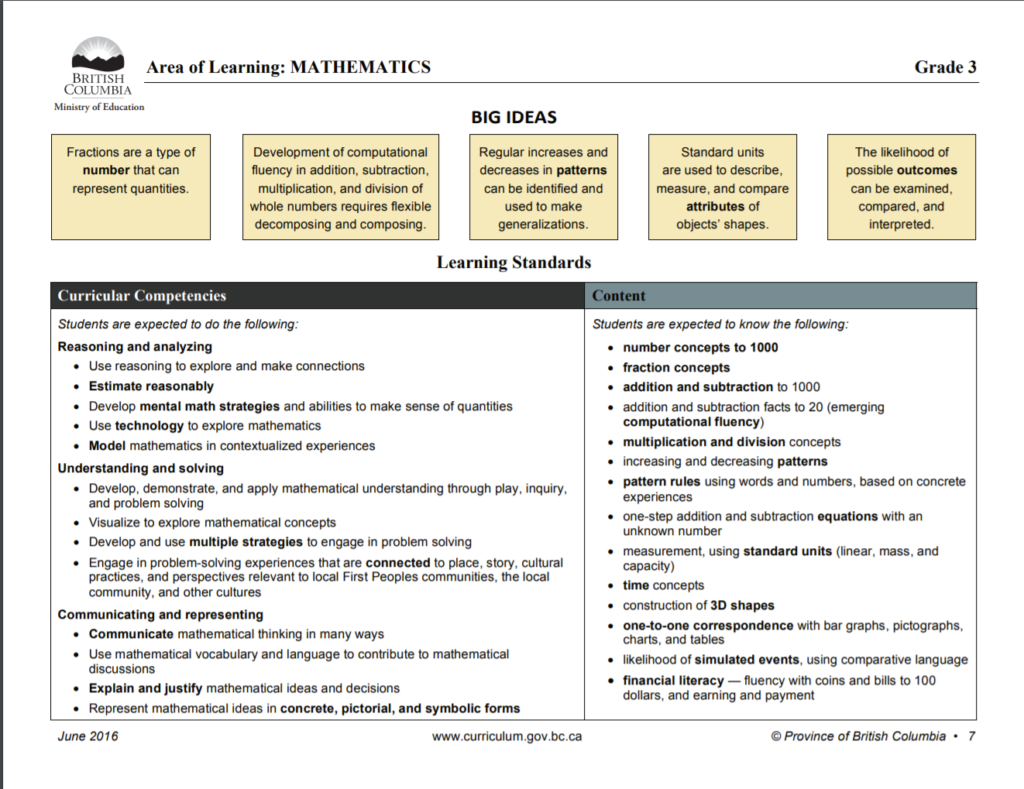
- Standards from BC Curriculum.
- How to Draw Bar Charts
Process:
Anticipatory Set
A video will bring a question to the classroom; participants might be asked to help the characters in the video solve the problem. For younger kids, the video could be a cartoon or a piece of the digital story. Instructors can create their own stories that should be based on the content.
JIJI
It could also be a Youtube video that will grab the students’ attention, and the video must target the content.
JIJI
Simple games or activities between small groups will also help the students engage from the beginning.
JIJI
Introduction
The introduction comes after the Anticipatory Set, and this part will be displayed via PowerPoints or Google Slides. For younger students, more visual arts would be better because it will catch their attention easier than simple lecturing.
JIJI
Introduce New Knowledge
This lesson will begin with a story: In a local grocery, some products are out of stock, and some need to be returned to the cargo for some reason. The truck driver is waiting for the order. Students need to discover a way to give the driver the right numbers and clear instructions. Instructors can pretend to be the person who says, “I don’t know.” Let the students gather their ideas as much as possible.
JIJI
Model New Skills and Knowledge
Instructors will first introduce the importance of numbers in real life and how numbers affect our work and lives. Then the instructor will give a content-related way to solve the problem: draw a graph or chart to display numbers so that the truck driver won’t feel confused. Then, the instructor will play an instructional video from YouTube to present the ideas and steps to draw a graph.
JIJI
Guided Practice
Students will work in groups or individually to solve the store’s problem with the material in hand, including a simple sales report and handmade image cards of the groceries.
JIJI
In a digital teaching environment, teachers will use e-learning modules and slides to help students finish their digital devices.
JIJI
Teachers should provide guidance and be supportive during this activity.
JIJI
Evaluation:
Instructors will use the rubric to evaluate the students’ tasks
JIJI
| Rubrics | Find out how many goods should be restocked | Wise choice in picking trucks | Produce clear graph which demonstrates data |
| Best Manager | |||
| Wonderful Cargo Deliverer | |||
| Fabulous Designer |
JIJI
Conclusion:
The closing is also the end of the story. With the students’ help, the truck driver successfully delivered the right goods to the store and returned the unwanted goods. It displays the power of Mathematics in solving real-life problems.
JIJI
Synthesize:
Instructors should wrap up all the content delivered in the classroom, and they will use Kahoot! to design some simple quizzes. The purpose is to recall the knowledge and enhance the learning outcomes.
JIJI